Thinking
February 13, 2026
Read time:
3 Minutes


Everyone throws algorithm around as a buzzword. Few can actually explain how it works.
If you're still trying to outsmart Meta with hyper-segmented interests or lookalikes, you're fighting the most advanced AI ad stack ever built.
Stop fighting it and start feeding it.
The Meta AI Hierarchy
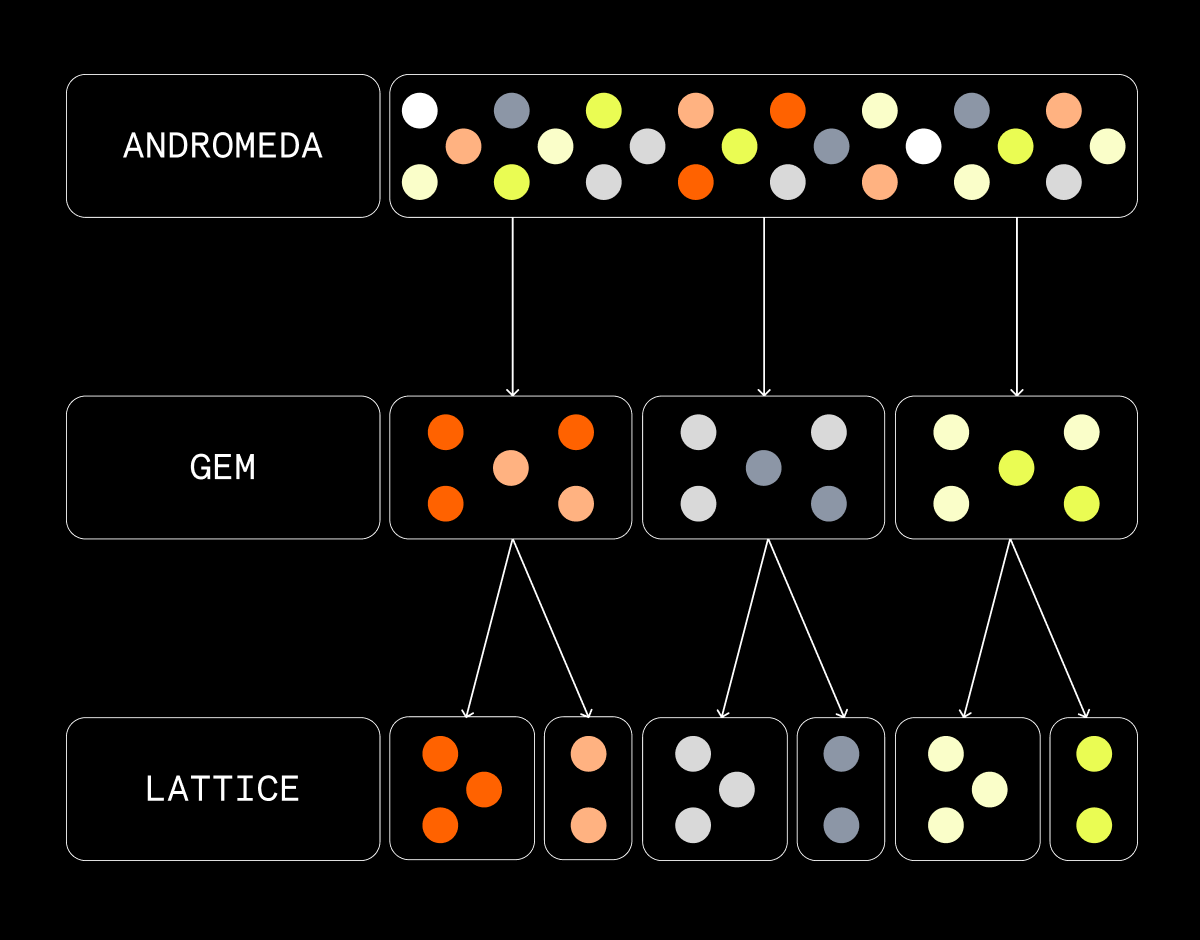
The system works top-down.
Massive data pool → single winning ad.
Layer 1 - Andromeda (The Retrieval Engine)
Think of Andromeda as the hand that reaches into millions of ads to pull out a shortlist for each user.
It triggers the moment someone opens the app. The key shift is that it doesn't use audiences the way we used to think about them - it uses your Creative Signal to find the right pocket of the market.
This is why Broad targeting is non-negotiable. Andromeda needs an ocean of data to find the right fish. Constrain it with narrow interests, and you're tying one hand behind its back.
Layer 2 - GEM (The Superbrain)
After Andromeda creates the pool, GEM narrows it down further.
Think of it as a superbrain that can read an entire library in seconds while retaining every detail. It watches your videos and reads your images to understand the actual meaning of your creative - not just engagement metrics, but what your ad is saying and who it should be shown to.
GEM figures out what a user is going to want next week, sometimes before they do. Meta reports it's 152% more efficient at driving performance than previous models.
Layer 3 - Lattice (The Final Decision)
Lattice is the massive library where all of Meta's AI models live - including GEM.
In the past, Meta kept these models separate, which is why interest targeting, lookalikes, and prospecting vs retargeting used to matter. Now Lattice brings everything together into one system that makes the final ad selection.
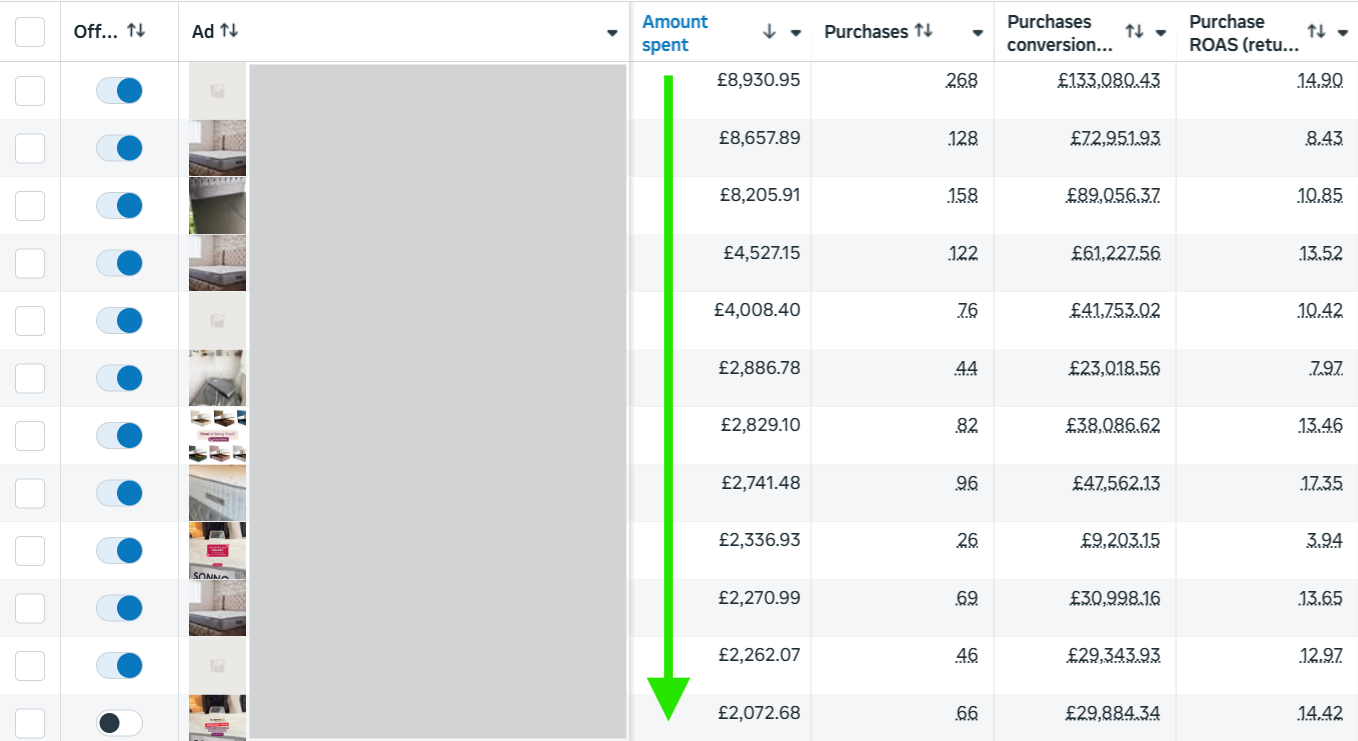
This is why we consolidate and review ad set performance alongside individual ads. A single ad might look weak on direct conversions, but it actually plays a crucial role earlier in someone's journey.
Big brands are measuring success based on ad spend more than ever - if Meta is pushing budget to an ad, it's seeing it as a key part of the buyer journey.
What This Means For You
Stop obsessing over settings. Start obsessing over Creative Diversity.
The algorithm is now smart enough to find your buyers — but only if you give it enough creative signal to work with. That means feeding it a range of hooks, angles, and formats so it can test, learn, and match the right ad to the right person at the right moment.
Start giving the machine better signals:
Logic Hooks - For analytical buyers who need the how and why. Lead with numbers, specs, comparisons, or process.
Example: Here's exactly why this costs £200 more than competitors.
Emotional Hooks - For those motivated by status, fear, or pain-point relief. Lead with transformation, identity, or consequences.
Example: Stop waking up exhausted every Monday.
Social Proof Hooks - For sceptical buyers who need validation. Lead with reviews, results, or UGC.
Example: 12,000 five-star reviews can't be wrong.
Message Continuity - Your ad promise must match your landing page. Andromeda now verifies this, and if there is a mismatch, your CPMs can get much more expensive.