Thinking
February 6, 2026
Read time:
3 Minutes


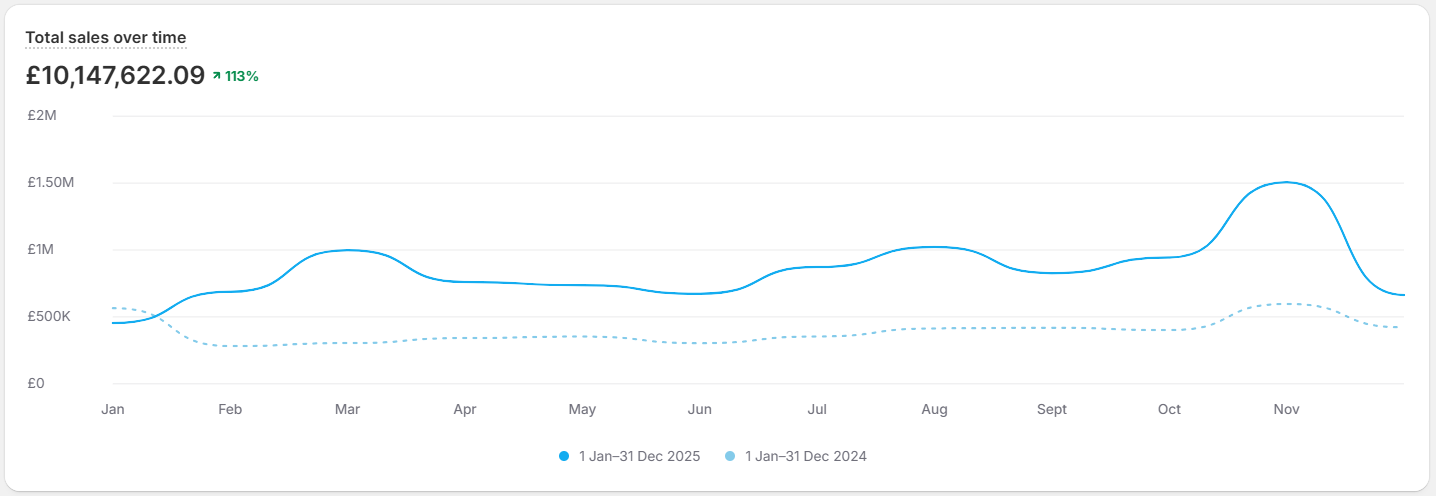
We cut this brand's nCAC by over 45% and scaled them past 8-figures. Peak month was £1.5M in November.
Three things made the difference - the numbers, one setting 90% of brands get wrong, and how we build creative.
Here’s a breakdown of how we achieved this.
The Results
Over £10M revenue. £8.2M of that came from new customers - over 80% incremental. nCAC down 45% year on year.
Spending less per customer and acquiring more of them. That's the whole game.
The Numbers
Before we touched any ads, we worked out the numbers. What can we actually pay for a customer and still be profitable? After product costs, fulfilment, overheads, agency fee - everything.
Most brands don't know this number. They're optimising for ROAS or staring at CPMs. None of that tells you if you're actually making money.
Once you know your breakeven and targets - especially MER, every decision is much more simple. Under it - pull back. Over it - push harder.
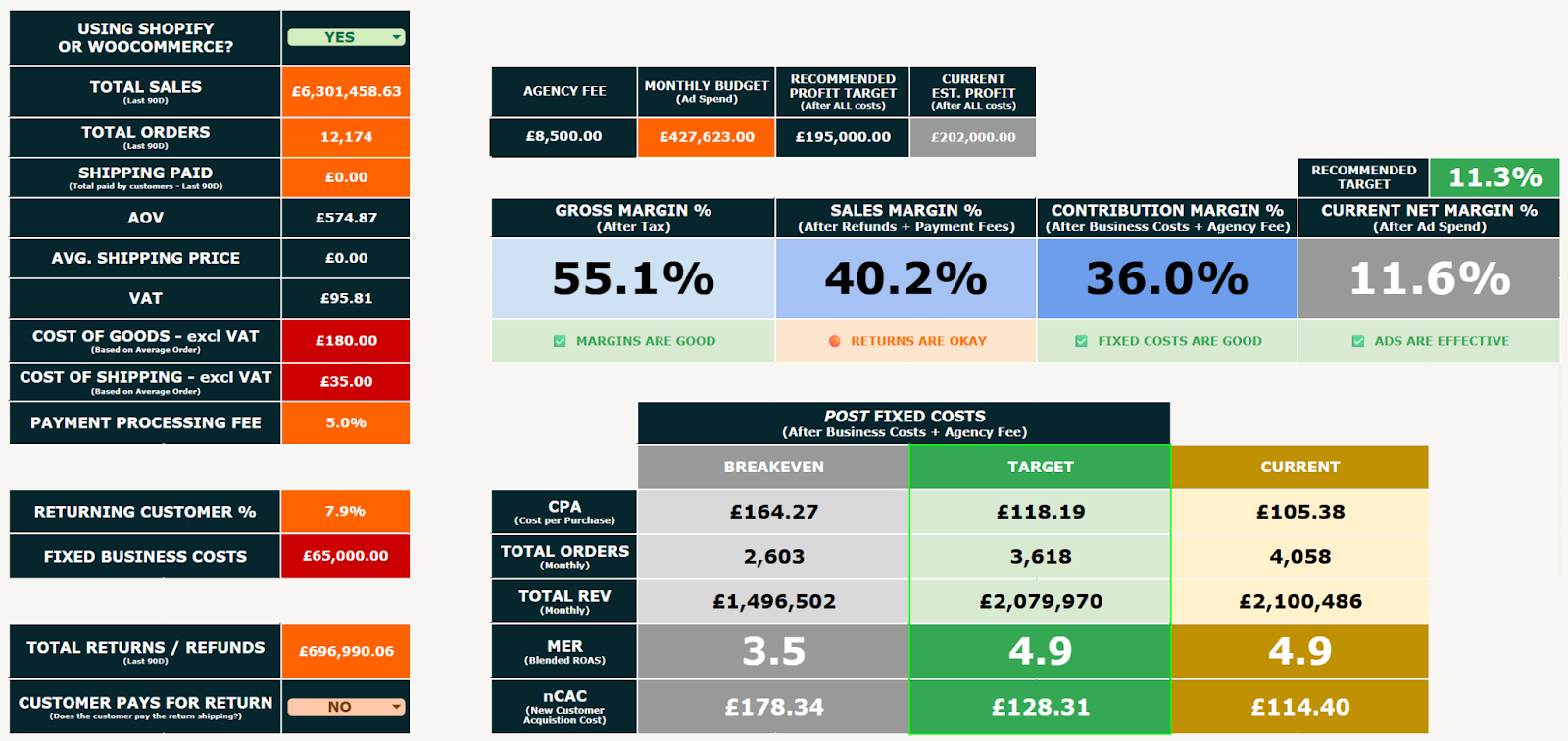
*Visual example of KPI calculator - not the actual figures
Attribution
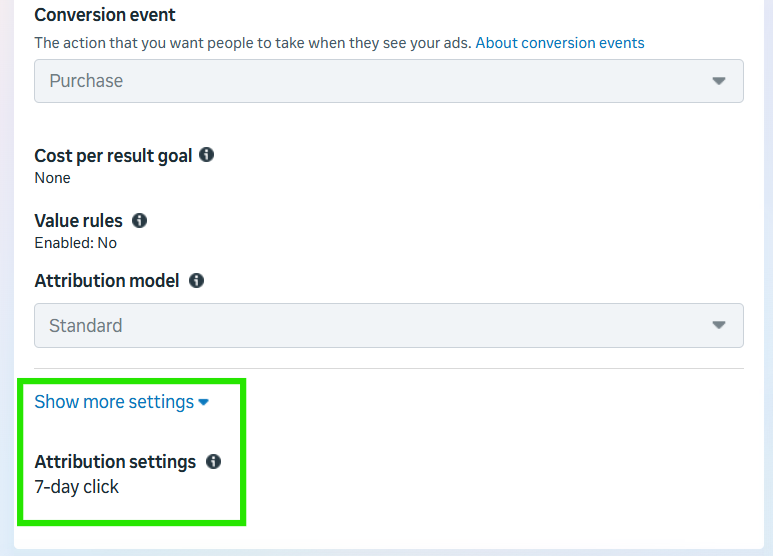
There was one crucial setting that made a noticeable difference.
They were on 7-day click, 1-day view attribution. This is default for a lot of accounts. Here's the problem: someone sees your ad, doesn't click, goes to Google, searches the product, buys. Meta counts that as a conversion.
Or even worse - people who already bought get served an ad a few hours later and Meta still tries to take credit.
We switched to 7-day click. Now it only counts people who actually clicked and converted.
Here's the bit most people miss - this changes how Meta optimises. On 1-day view, the algorithm finds people who might see your ad and buy anyway. On 7-day click, it has to find people who will actually click and convert.
Persona Research
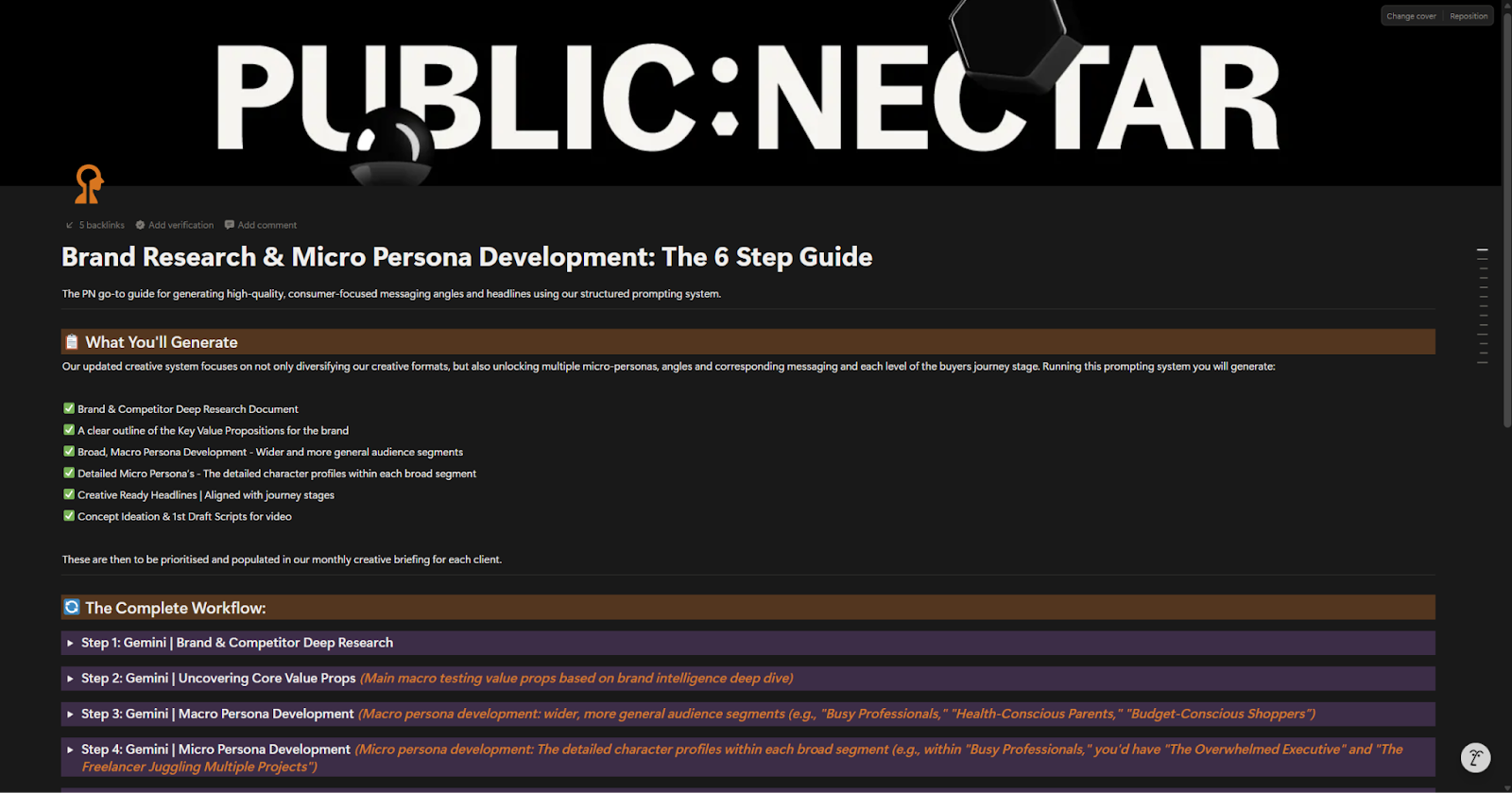
We use a structured system for every client.
We start with Gemini for deep research, then use Grok to uncover real-world issues through customer listening. When we ran this for the mattress brand, three patterns emerged that were being ignored:
Pain - people waking up stiff.
Overheating - people waking up too hot.
Partner movement - light sleepers getting disturbed.
Most mattress ads talk about pocket springs and cooling gel. That's product stuff… nobody cares. People care about THEIR problem.
Creative Diversity
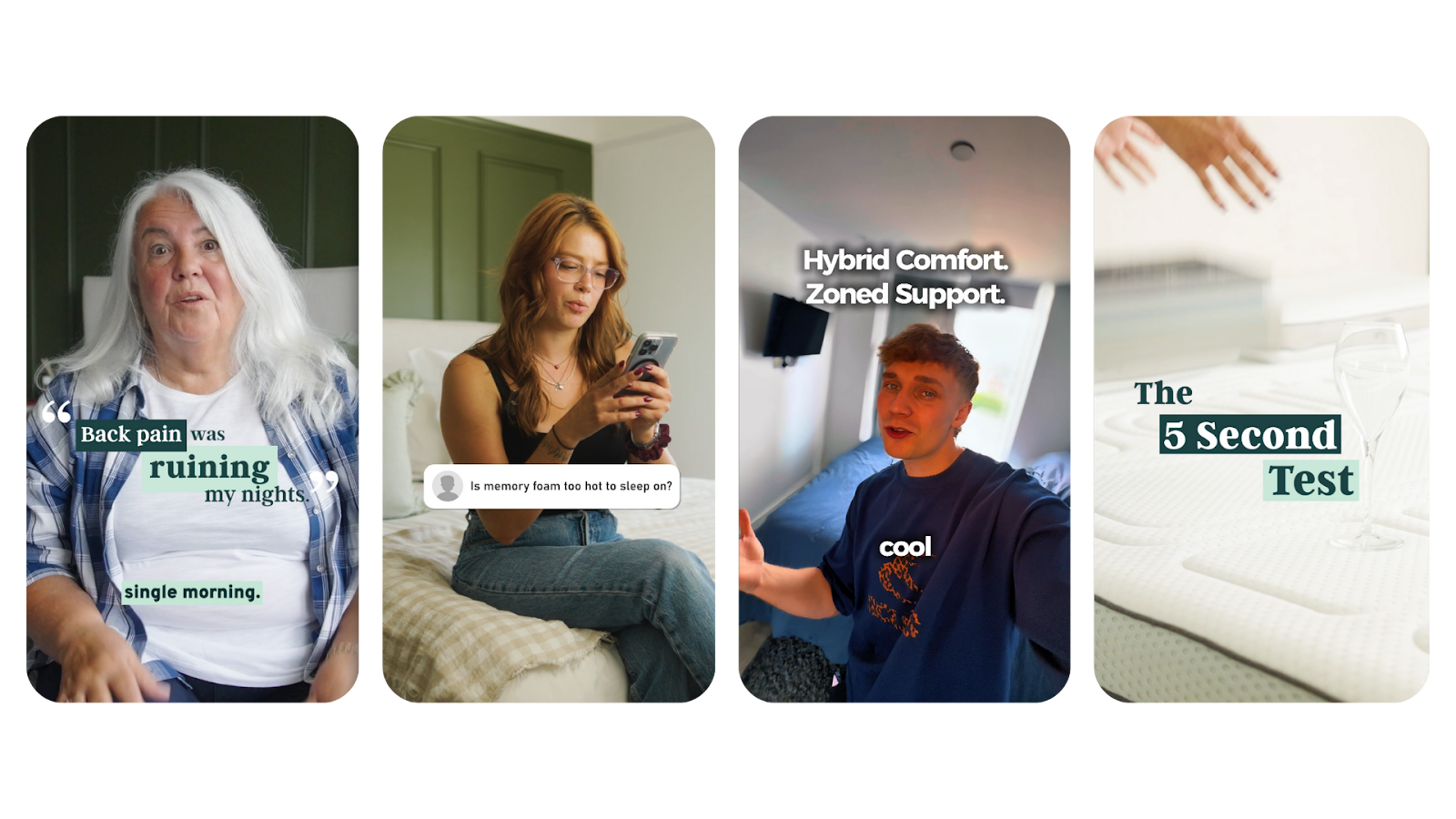
Different people respond to different formats. So we built creative across the full spectrum, here are just a few specific examples:
A high-production objection handler tackling the biggest temperature barrier: "Is memory foam too hot to sleep on?"
An emotional piece for the pain persona - not talking about springs, talking about getting your life back.
UGC-style content for the person who's tried everything - supplements, sleep hacks - before realising it was the mattress.
And visual proof for the partner movement persona - a glass of water on the bed proving motion isolation in 3 seconds without a single word.
The Bottom Line
Numbers, attribution, and research-led creative.
We fixed the fundamentals, then built creative around what customers actually care about.
In 2026, our advice is rather than always worrying about small settings / in-platform changes… take a step back and remember the fundamentals of marketing.
Have a great product (with good margins), paired with a great offer and great ads to get the message across. Get those right, and you’re on the right track.